
Ever felt that prickle on the back of your neck when entering an old building? Or heard a story about a local landmark that gives you chills? What makes a place haunted is a question that captures our imagination, blending history, mystery, and a touch of fear. But why do some locations gain this reputation while others don’t? In this post, we’ll delve into the intriguing factors that contribute to a place being labelled ‘haunted,’ exploring everything from tragic history and folklore to psychological phenomena and the ongoing debate between believers and skeptics.
Whispers of the Past: Why Are Some Places Believed to Be More Haunted Than Others?
It often seems that locations with intense histories are prime candidates for haunting claims. Places associated with strong emotions, sudden deaths, or prolonged suffering frequently top the lists of the world’s most haunted spots. There are several intertwining reasons why history and perception contribute to a place’s spooky reputation, ultimately influencing what makes a place haunted in the public mind:
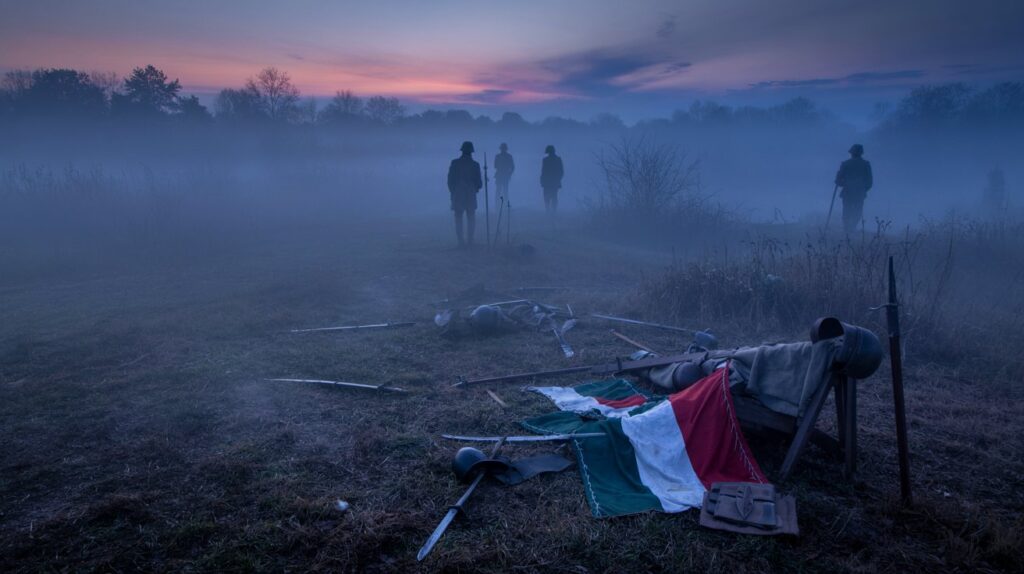
- Tragic Events: Locations like former prisons, battlefields, old hospitals, or homes where traumatic events occurred are often associated with lingering spirits. The belief is that intense emotional energy from the past somehow imprinted itself onto the location, a key factor in what makes a place haunted according to many.
- Folklore and Storytelling: Once a story starts, it tends to grow. Local legends, ghost stories passed down through generations, and media portrayals solidify a place’s haunted status in the public consciousness. We are drawn to narratives, and spooky tales are particularly compelling in shaping our understanding of what makes a place haunted.
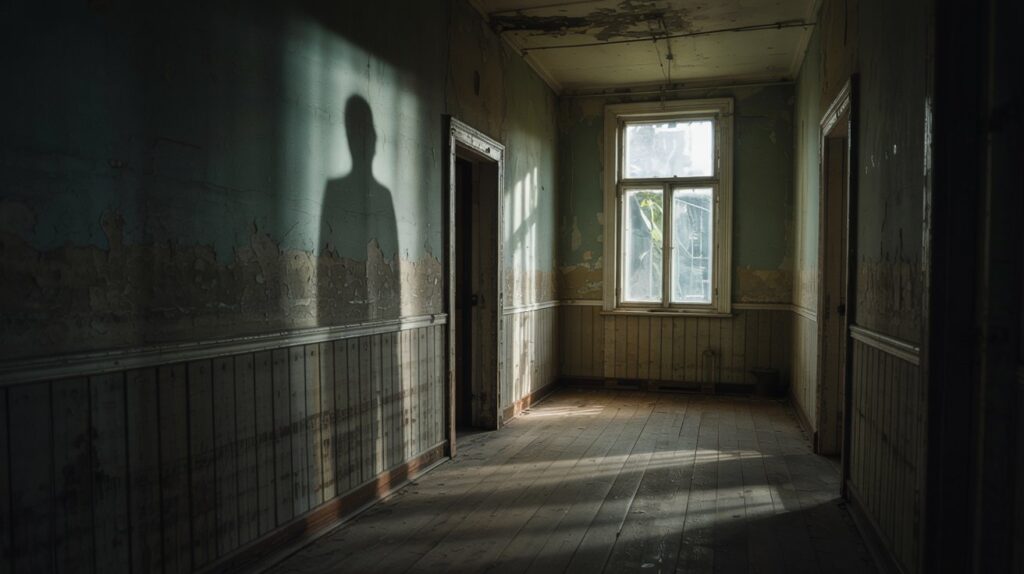
- Psychological Priming: When you expect a place to be haunted, you’re more likely to interpret ambiguous sights, sounds, or feelings as paranormal. This is known as confirmation bias. Our brains are pattern-matching machines, and sometimes they create patterns (like seeing a face in shadows – pareidolia) where none objectively exist, especially when we’re anxious or primed by spooky stories, contributing to the perception of what makes a place haunted.
- Age and Atmosphere: Older buildings naturally have more history and often possess architectural features (creaky floors, drafty corridors, dim lighting) that contribute to an unsettling atmosphere, making mundane occurrences seem more mysterious. This atmosphere often plays a significant role in what makes a place haunted feel so real.
The Science of the Supernatural: Investigating Paranormal Claims
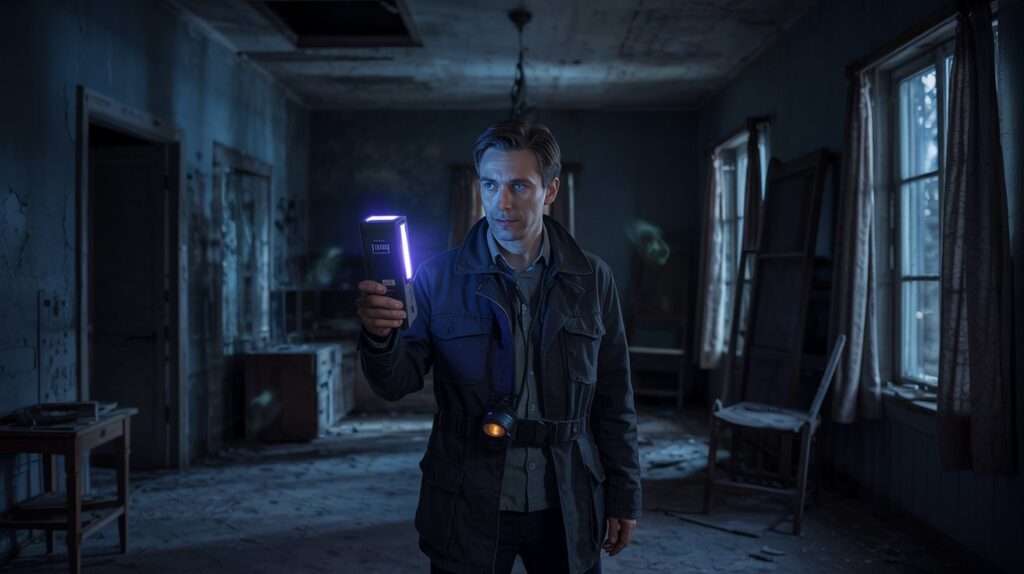
When stories aren’t enough, paranormal investigators step in, attempting to capture evidence of the unexplained in locations believed to be haunted. Armed with various gadgets, they explore reputedly haunted locations. But what does science say about their methods and findings when trying to understand what makes a place haunted?
Paranormal investigators often use equipment like:
- EMF (Electromagnetic Field) Readers: Used to detect fluctuations in electromagnetic fields. The theory among investigators is that spirits might manipulate these fields. However, skeptics point out that EMF fluctuations are common in buildings due to wiring, appliances, and external sources, and there’s no proven link between EMF and ghosts, questioning its role in what makes a place haunted.
- EVP (Electronic Voice Phenomenon) Recorders: Audio devices used to capture sounds potentially inaudible to the human ear, interpreted as disembodied voices. Critics argue that EVPs are often audio pareidolia (hearing meaningful sounds in random noise) or misinterpretations of background noise or radio interference, offering alternative explanations for perceived ghostly encounters in potentially haunted places.
- Thermometers/Thermal Cameras: Used to detect sudden temperature drops (“cold spots”), often associated with ghostly presence. Scientific explanations include drafts, convection currents, or psychological perception making us feel colder when scared, providing natural reasons for phenomena observed in locations considered haunted.
“While many investigators are sincere, the challenge lies in proving a paranormal cause,” notes Dr. Evelyn Reed, a fictional sociologist specializing in belief systems (representing a skeptical viewpoint). “Most phenomena recorded have plausible natural or psychological explanations, such as infrasound (low-frequency sound below human hearing that can cause feelings of unease or dread), carbon monoxide exposure (which can cause hallucinations), or simply the power of suggestion. These factors often contribute to the feeling of what makes a place haunted.”
Can Ghosts Be Proven Scientifically?
This is the million-dollar question when considering what makes a place haunted a matter of scientific inquiry. Currently, there is no accepted scientific proof for the existence of ghosts. Science relies on repeatable, testable, and falsifiable evidence. Ghostly encounters are overwhelmingly anecdotal, subjective, and notoriously difficult to replicate under controlled conditions. While investigators gather intriguing data (photos, audio, readings) from places believed to be haunted, none of it has definitively crossed the threshold into scientific proof accepted by the mainstream scientific community. The “evidence” remains open to interpretation and often has more mundane explanations for why a place might feel haunted.

Conclusion: The Enduring Mystery of Haunted Places
So, what makes a place haunted? The answer isn’t simple. It’s a fascinating mix of documented history, compelling folklore, human psychology, and the persistent search for answers beyond our current scientific understanding. Whether it’s the lingering energy of past events, the power of suggestion, or something genuinely unexplained, the allure of haunted locations remains strong. They challenge our perception of reality and remind us that there might still be mysteries hiding in the shadows.

What do you think? Have you ever had an experience in a supposedly haunted place? Share your thoughts and stories in the comments below!