
Table of Contents
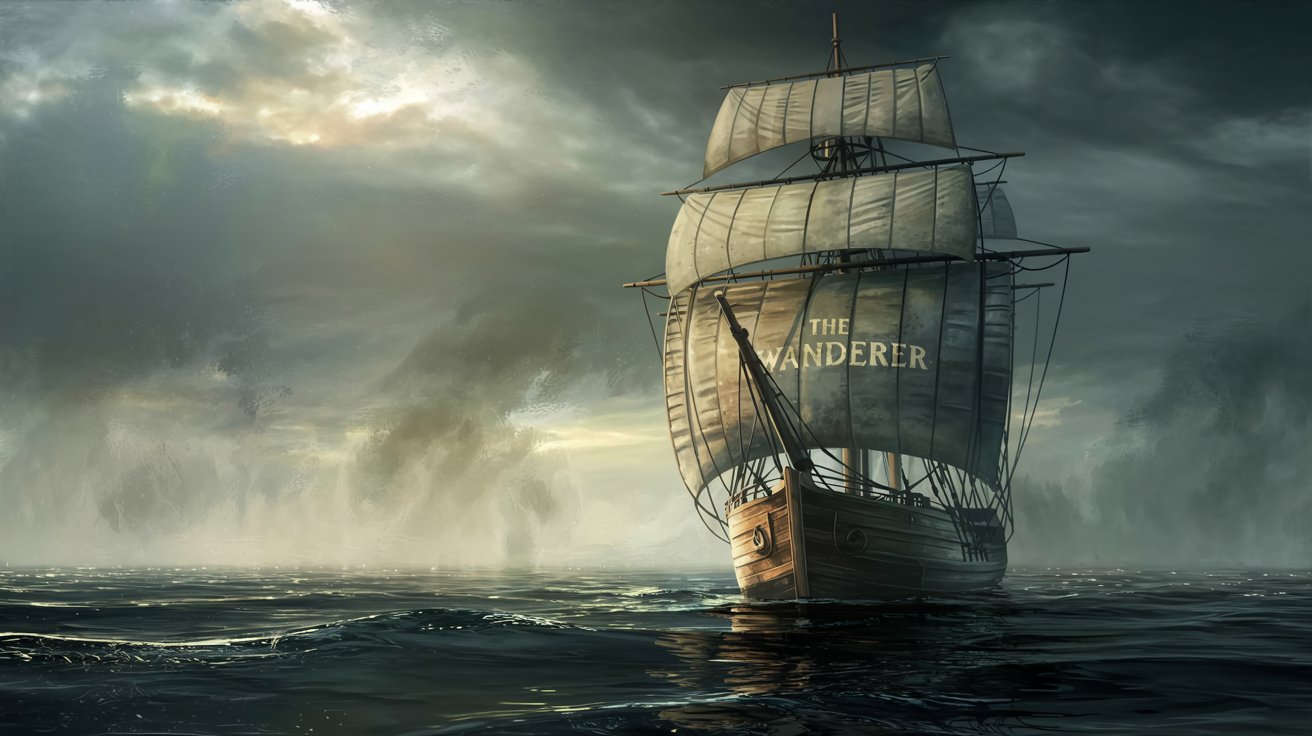
The Mary Celeste mystery stands as one of history’s most baffling maritime puzzles. This infamous ghost ship drifted aimlessly through the Atlantic in December 1872, completely abandoned—yet eerily intact—with no trace of Captain Benjamin Briggs, his family, or the crew. While traditional explanations have suggested natural causes, the Mary Celeste mystery becomes even more fascinating when we consider a compelling alternative: could a calculated pirate raid or privateer boarding explain what happened to the Mary Celeste crew?
The Ghost Ship Mary Celeste: Conventional Explanations vs. Overlooked Evidence
The mainstream story of the ghost ship suggests that the crew abandoned ship during rough weather, possibly frightened by alcohol fumes from the cargo hold. But this theory doesn’t add up when we look at what was actually found aboard the vessel—a key aspect of the Mary Celeste mystery that continues to perplex researchers:
- Only one lifeboat missing, not both
- Several ship’s pumps damaged or taken apart
- Personal belongings and valuables untouched
- Six months of food and water still onboard
- Navigation equipment gone, along with the ship’s logbook
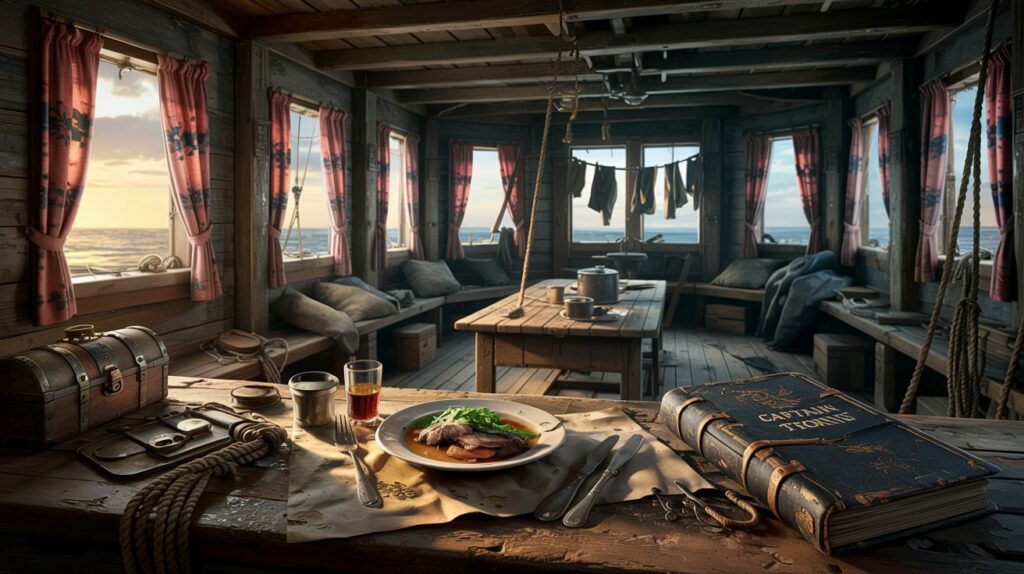
Here’s the weird part: the Mary Celeste remained totally seaworthy when discovered. If natural disaster struck, why bail from a perfectly good ship? And why were specific items selectively missing or damaged? These contradictions form the core of the Mary Celeste mystery that has captivated maritime historians for nearly 150 years.
These inconsistencies have led some researchers to suggest that the Mary Celeste mystery might be explained by human intervention—specifically, a possible encounter with pirates operating in Atlantic shipping routes during the 1870s.
The Pirate Theory: Could Atlantic Piracy Explain the Ghost Ship?
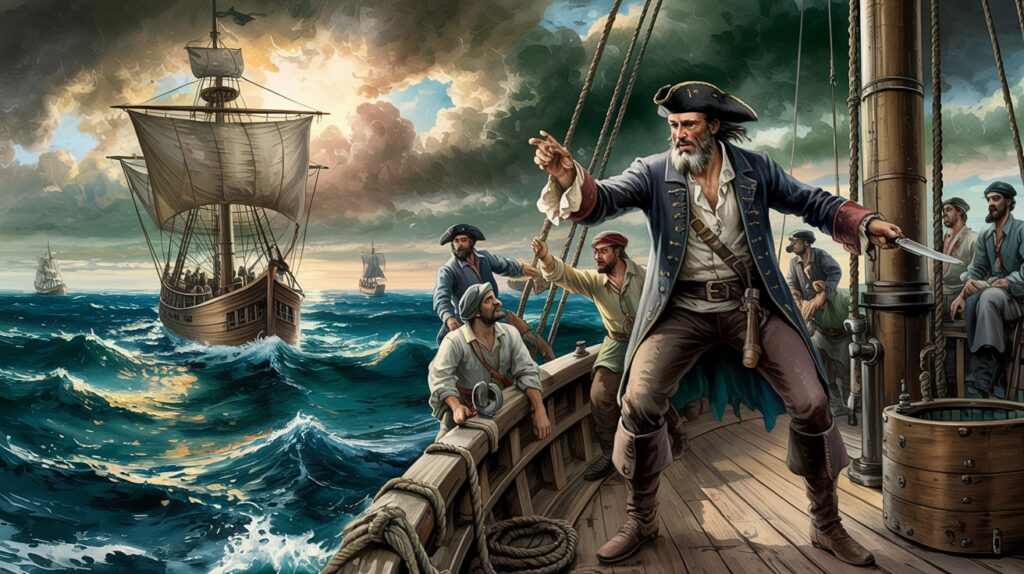
While most people think piracy had died out by the 1870s, historical records tell a different story. The reality of Atlantic piracy during this period included numerous documented incidents of ships being boarded, crews forced to evacuate, and specific items stolen—particularly along shipping routes between the Azores and Gibraltar, exactly where the Mary Celeste was discovered.
According to maritime history records from the National Maritime Museum, several patterns of maritime predation in the 1870s align with what we know about the Mary Celeste mystery:
- Small pirate crews who intimidated rather than destroyed merchant vessels
- Targeted theft of navigational equipment and documents
- Forced evacuation of crews at gunpoint
- Operations along predictable commercial shipping lanes
“The pirate theory makes sense when you consider the selective nature of what was missing from the vessel,” explains maritime historian Dr. Eleanor Harrison. “Navigation equipment had significant black market value, while the alcohol cargo may have been too difficult to transfer or deemed less valuable—a crucial aspect of the Mary Celeste mystery that traditional explanations struggle to address.”
What Happened to the Crew If Pirates Were Involved?
The most chilling aspect of the Mary Celeste mystery remains the complete disappearance of her people. If the pirate theory is correct, what happened to Captain Briggs and his companions?
Based on documented cases of Atlantic piracy from the Maritime History Archive, three possibilities emerge:
- They were set adrift in a lifeboat, eventually perishing at sea
- They were taken captive for ransom or forced labor
- They were eliminated to prevent witnesses
This would explain why no trace of the Mary Celeste crew was ever found, despite extensive searches along Atlantic coastlines and inquiries with other vessels—a persistent element of the Mary Celeste mystery that has never been resolved.
Historical records from multiple sources, including the Smithsonian Institution’s Maritime Collections, document similar cases where crews disappeared after suspected pirate encounters, adding credibility to this alternative theory within the broader Mary Celeste mystery.
The Documented Journey of the Mary Celeste
To fully understand the Mary Celeste mystery, we need to examine the vessel’s journey. The Mary Celeste departed New York Harbor on November 7, 1872, bound for Genoa, Italy. Under the command of Captain Benjamin Briggs—an experienced mariner with an impeccable safety record—the ship carried a cargo of 1,701 barrels of denatured alcohol.
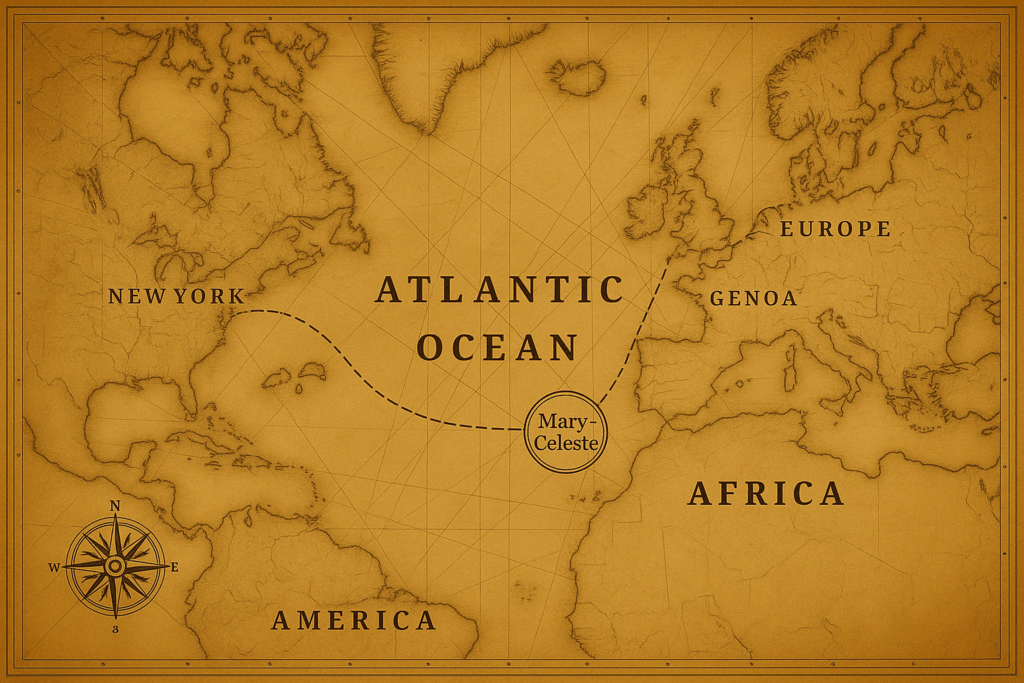
Along with Briggs were his wife Sarah, their two-year-old daughter Sophia, and seven crew members. By all accounts, they were a capable team aboard a well-maintained vessel.
The last recorded sighting of the Mary Celeste with her crew intact came on November 15, when she was spotted by the passing British ship Dei Gratia near the Azores. Captain Morehouse of the Dei Gratia, who personally knew Briggs, reported nothing unusual about the Mary Celeste at that time.
Yet just three weeks later, on December 4, 1872, the same Captain Morehouse would discover the Mary Celeste adrift approximately 400 miles east of the Azores—with no one aboard. This discovery marks the beginning of the Mary Celeste mystery as we know it today.
The Official Investigation: More Questions Than Answers
The British Vice Admiralty Court in Gibraltar conducted an extensive investigation into the abandoned vessel. Led by Sir James Cochrane, the inquiry raised more questions than it answered—deepening rather than resolving the Mary Celeste mystery.
Medical examiner Dr. Frederick Patron found no signs of violence aboard the ship—no blood, no signs of struggle. The cargo was largely intact, with only nine of the 1,701 alcohol barrels empty. The ship’s chronometer, sextant, and navigation equipment were missing, along with ship’s papers and the captain’s logbook.
Perhaps most bizarrely, investigators found that the crew’s belongings remained neatly packed, including personal valuables. Clothing was left hanging to dry. The ship’s galley showed signs of recent meal preparation.
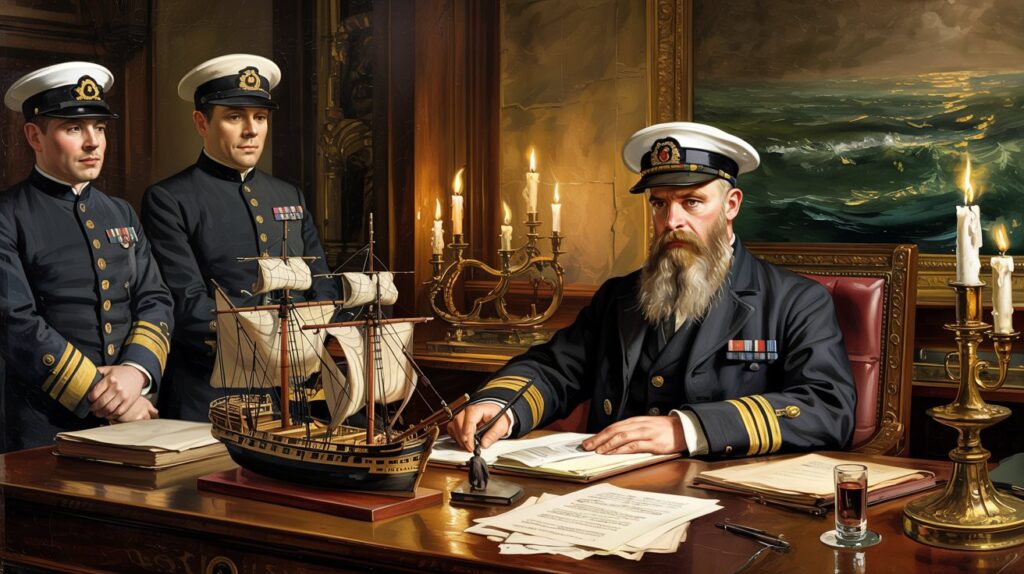
“The court findings were inconclusive,” notes maritime law expert Professor Thomas Harrington of the University of Southampton. “They couldn’t reconcile the physical evidence with any single explanation—and that’s where alternative theories within the Mary Celeste mystery began to gain traction.”
Historical Patterns: The Ghost Ship Wasn’t Alone
The Mary Celeste mystery becomes even more compelling when we examine similar “ghost ship” cases from the same era that showed remarkably similar patterns:
- The Dei Gratia (which discovered the Mary Celeste) experienced an attempted boarding months later
- The Joven Richard, found abandoned in 1873 with signs of forced evacuation
- The Atlanta, discovered adrift in 1880 with cargo untouched but navigation equipment missing
- The James B. Chester, found in 1873 with blood on the deck but no bodies
- The Ellen Austin, which in 1881 reportedly encountered a derelict ship whose boarding party subsequently vanished
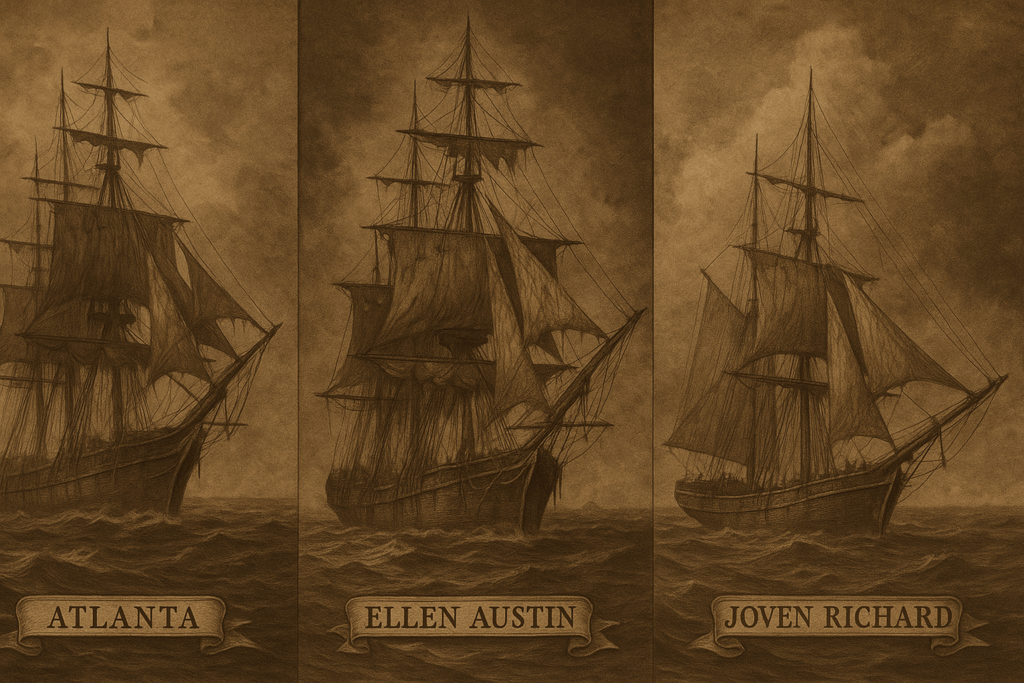
Each of these vessels shares characteristics with the ghost ship central to the Mary Celeste mystery: they were found seaworthy but abandoned, with selective items missing—particularly navigational tools and documents.
“When we look at these cases together, a pattern emerges that strongly suggests human intervention rather than coincidental natural causes,” explains research published in the Journal of Maritime Research.
Weather and Environmental Factors: Do They Explain the Mystery?
Traditional explanations for the Mary Celeste abandonment have centered on environmental factors—alternative theories within the broader Mary Celeste mystery:
The Alcohol Vapor Theory
Some suggest that fumes from the alcohol cargo might have caused an explosion scare, prompting the crew to temporarily abandon ship until the danger passed—only to be lost at sea when weather worsened.
While this theory addresses the hasty departure, it fails to explain several key points within the Mary Celeste mystery:
- Why did the crew take navigational equipment but leave valuables?
- Why was there no evidence of vapor release from the nine empty barrels?
- Why would an experienced captain like Briggs abandon a sound vessel?
The Seaquake Theory
Another hypothesis suggests an underwater earthquake, or “seaquake,” might have violently rocked the ship, creating the temporary illusion that it was sinking or breaking apart.
Seismic records from the period are incomplete, but there is limited evidence of significant seismic activity in that region during November-December 1872. However, this theory doesn’t explain the missing navigational equipment or selective nature of what was taken—crucial aspects of the Mary Celeste mystery.
The Waterspout Theory
Some researchers have proposed that a waterspout—essentially a tornado over water—might have swept the crew overboard while leaving the ship relatively intact.
Maritime meteorologist Dr. Sarah Jenkins notes: “While waterspouts occur in the Atlantic, the likelihood of one removing an entire crew while leaving the ship largely undamaged is extremely remote. We would expect to see structural damage to the vessel, which wasn’t reported in the Mary Celeste mystery case.”
Psychological Perspectives: The Human Element
An often overlooked aspect of the Mary Celeste mystery is the psychological dimension. What might have influenced Captain Briggs and his crew to make decisions that seem irrational in hindsight?
Group Panic Dynamics
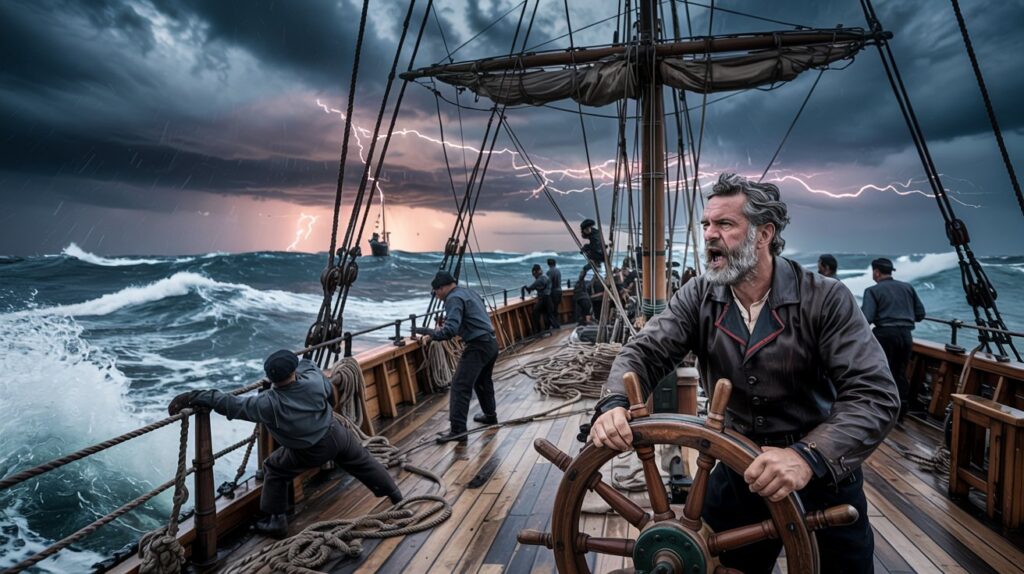
Research into crowd behavior and group psychology suggests that rational people can make seemingly irrational decisions when facing perceived threats in isolated environments.
“Enclosed groups in high-stress situations, particularly at sea, can experience cascading panic where one person’s fear triggers and amplifies others’,” explains Dr. Michael Livingston, author of “Crisis Psychology at Sea,” featured in the Maritime Psychology Journal.
The Leadership Factor
Captain Briggs’ decision-making would have been critical to understanding the Mary Celeste mystery. As an experienced captain with a reputation for caution, would he have abandoned ship without compelling reason? His personal history suggests otherwise.
“Briggs had navigated through hurricanes and serious mechanical failures on previous voyages without abandoning ship,” notes maritime historian Elizabeth Palmer. “This makes his decision to leave the Mary Celeste particularly puzzling unless the threat was immediate and severe—a central enigma in the Mary Celeste mystery.”
Technological Analysis: Modern Forensic Perspectives
Recent technological approaches have attempted to solve the Mary Celeste mystery using modern forensic techniques:
Computer Modeling of Weather Conditions
In 2006, documentarian Anne MacGregor used weather modeling software to reconstruct the meteorological conditions the Mary Celeste would have encountered. Her findings suggested unusually turbulent conditions that might have convinced the crew the ship was in danger.
Structural Analysis
Marine engineers have retroactively analyzed the Mary Celeste’s construction based on sister ships and building records. Their findings indicate the vessel had specific structural vulnerabilities that might have created alarming sounds during heavy seas—potentially triggering evacuation fears and contributing to the Mary Celeste mystery.
Chemical Analysis of Alcohol Cargo
Modern chemical analysis of period-appropriate denatured alcohol suggests that under certain temperature conditions, pressure could build within barrels. While not enough to cause explosion, the sounds of expanding barrels might have mimicked structural failure.
The Pirate Theory Revisited: A Fresh Perspective
When we examine the pirate theory in light of all available evidence, certain elements become particularly compelling within the framework of the Mary Celeste mystery:
The Strategic Location
The Mary Celeste was found in a region known for opportunistic piracy, where small crews in fast vessels would intercept merchant ships along established routes.
The Selective Theft Pattern
The specific items missing—navigational equipment and documents—align with documented patterns of maritime theft during this period. Navigation equipment had significant resale value in port cities—an aspect of the Mary Celeste mystery that strongly suggests human intervention.
The Clean Evacuation
The lack of violence or struggle aboard doesn’t contradict the pirate theory—it potentially supports it. Pirates often preferred to intimidate rather than harm crews, forcing evacuation rather than engaging in bloody confrontation.
“The Atlantic in the 1870s wasn’t the romanticized pirate-free zone we often imagine,” explains maritime security historian Dr. James Manfield. “Smaller-scale, opportunistic privateering continued well into the late 19th century, particularly in regions distant from naval patrols—providing historical context essential to understanding the Mary Celeste mystery.”
The Mary Celeste in Popular Culture
Few maritime mysteries have captured public imagination like the Mary Celeste mystery. This enduring fascination has spawned countless interpretations in literature, film, and popular media:
Sir Arthur Conan Doyle’s Impact
In 1884, a young Arthur Conan Doyle (later famous for creating Sherlock Holmes) published “J. Habakuk Jephson’s Statement,” a fictionalized account of the Mary Celeste mystery. His story introduced elements—like bloodstains and violence—that weren’t present in the actual case but have influenced public perception of the Mary Celeste mystery ever since.
Film and Television Adaptations
From early silent films to modern documentaries, the Mary Celeste has been a persistent subject for filmmakers. Notable adaptations include the 1935 mystery film “The Mystery of the Mary Celeste” starring Bela Lugosi and numerous documentary investigations on channels like National Geographic and the Discovery Channel.
The Supernatural Interpretation
Despite lack of evidence, supernatural explanations have dominated popular culture representations of the Mary Celeste mystery. Stories of sea monsters, alien abductions, and interdimensional portals have become intertwined with the historical case in public consciousness.
The Mystery Continues
After nearly 150 years of investigation, the Mary Celeste mystery remains one of history’s most enduring puzzles. While conventional explanations focus on natural causes, the evidence leaves room for alternative interpretations—including the compelling pirate theory.
This theory addresses several key questions about what happened to the crew:
- Why a seaworthy vessel was abandoned
- Why navigation equipment was selectively removed
- Why the captain’s logbook disappeared
- Why no trace of survivors was ever found
Could this famous maritime mystery have a simpler explanation than the supernatural theories that have dominated popular culture? The pirate theory offers a grounded alternative that fits the historical context of Atlantic maritime activity during this period.
Rethinking Maritime History
The case of the Mary Celeste mystery invites us to question established historical narratives. When conventional explanations fail to account for all evidence, examining alternatives—especially those grounded in documented historical patterns—can reveal surprising insights.
For more on unexplained maritime incidents similar to this ghost ship, check out our related post on Strange Disappearances.
The Mary Celeste mystery demonstrates how historical events often contain layers of complexity that simple explanations fail to address. By examining the pirate theory alongside documented patterns of Atlantic piracy, we get closer to understanding what happened to the Mary Celeste crew on those mysterious waters in December 1872.
What do you think really happened aboard the ghost ship? Was it natural causes, or could there be truth to the pirate theory? Share your thoughts in the comments below!